
As artificial intelligence (AI) rapidly evolves, one of its most transformative innovations is the AI agent. These smart, autonomous programs are designed to perform tasks on behalf of humans, making decisions, solving problems, and improving efficiency across a variety of industries. From customer service to IT, AI agents are revolutionizing the way businesses operate. In this comprehensive guide, we’ll dive into the world of AI agents, explaining what they are, how they work, and the types of agents that exist. We’ll also explore their potential applications and answer common questions like, "How do I make my own AI agent?" and "What are the benefits of using AI agents in customer support?"
What Is an AI Agent?
At its core, an AI agent is an autonomous software system that performs tasks by interacting with its environment. These tasks could be as simple as responding to a user query or as complex as analyzing large datasets to make decisions. AI agents rely on a variety of AI technologies, including machine learning (ML), natural language processing (NLP), and large language models (LLMs), to interpret information and improve their performance over time.
 Unlike traditional software, AI agents do not rely solely on predefined instructions. Instead, they can "learn" from data, understand context, and make decisions with minimal human intervention.
Simplified Explanation of an AI Agent
Think of an AI agent as a smart assistant, much like Siri or Alexa, that helps users by automating repetitive tasks or providing relevant information. These systems can take the initiative, meaning they can respond proactively rather than waiting for input. For instance, a customer service AI agent can detect the tone of a customer’s inquiry and adjust its responses accordingly. While early AI agents were limited to simple tasks, modern versions can solve complex problems, such as processing refunds, offering product recommendations, or diagnosing IT issues. Some examples include:
- Customer service bots: AI agents that handle customer queries 24/7.
- IT support agents: AI programs that assist with troubleshooting or password resets.
- Healthcare assistants: AI agents that schedule appointments or help patients with basic medical questions.
How AI Agents Make Decisions
AI agents are designed to perceive their environment (via sensors or data inputs), process the information, and then act on it. This decision-making process often involves selecting the best course of action based on predefined goals or user requirements. To do this, AI agents typically operate using one of several models:
- Reactive Agents: These agents operate based on pre-programmed rules. They respond directly to stimuli without considering past experiences.
- Deliberative Agents: These agents make decisions based on a planned sequence of actions, considering both current and future states.
- Learning Agents: Perhaps the most advanced, learning agents improve over time by adapting to new information and scenarios. These systems use algorithms like reinforcement learning to continually refine their performance. The decision-making ability of AI agents makes them ideal for automation. Whether managing logistics or optimizing customer experiences, AI agents provide businesses with a versatile, intelligent tool that can operate autonomously.
Choosing Between AI Agents and Traditional Automation Tools
A common question businesses face is whether to opt for AI agents or conventional automation tools. The main difference lies in autonomy. Traditional automation systems work based on preset rules or scripts. They are ideal for structured, repetitive tasks, but they lack the flexibility to handle dynamic environments or unexpected variables.
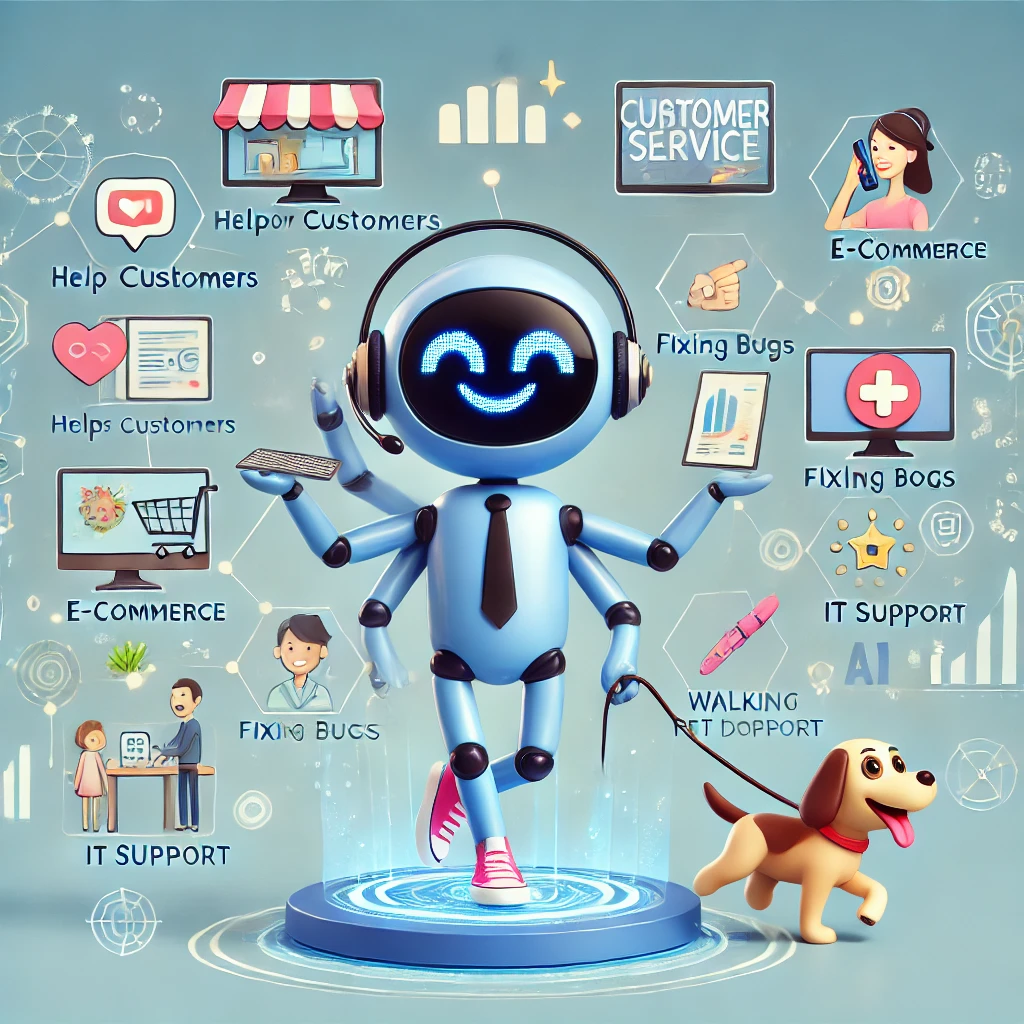 In contrast, AI agents can learn from their interactions and adapt over time, making them suitable for more complex scenarios. For example, an AI agent in customer service can detect sentiment in a customer’s message and adjust its tone accordingly—a task traditional bots may struggle with. When deciding between an AI agent and other tools, consider:
- Scalability: AI agents can manage increasing complexity and adapt without requiring manual updates.
- Flexibility: AI agents can respond to dynamic changes in their environment, unlike rule-based automation.
- Cost-effectiveness: While AI agents may require a higher initial investment, their ability to continuously learn and improve can reduce long-term operational costs.
Types of AI Agents
There are several types of AI agents, each suited to different tasks and industries. Here’s a quick overview of the most common types:
1. Reactive Agents
These agents follow a simple if-then rule and do not retain any memory of previous interactions. They respond to current stimuli based on predefined rules. While limited, they are still valuable for repetitive, rule-based tasks.
2. Deliberative Agents
These agents plan their actions by maintaining an internal model of the environment. They can set goals and make decisions based on current and predicted states. Deliberative agents are useful for tasks that require strategic planning, such as inventory management or route optimization.
3. Learning Agents
Learning agents improve their performance over time. By analyzing past interactions, they become better at solving problems or predicting outcomes. These agents are commonly used in areas like recommendation engines and personalized marketing.

4. Collaborative Agents
These agents work alongside human users or other agents to achieve a goal. They are particularly useful in customer service, where they can assist human agents in solving complex problems.
5. Utility-based Agents
These agents make decisions that maximize a utility function, which represents their goals. Utility-based agents are often used in financial modeling or decision-support systems, where multiple outcomes need to be evaluated based on their desirability.
Real-world Applications of AI Agents
1. Customer Service
AI agents have revolutionized customer support by providing round-the-clock service. Instead of waiting for human agents, customers can interact with AI agents to get instant answers to their questions, process returns, or track orders. These agents can handle routine inquiries and escalate more complex issues to human representatives if necessary. For example, companies like Zendesk have integrated AI agents into their customer support operations to enhance the customer experience (CX). These systems can detect customer intent, identify common issues, and provide personalized recommendations—all while maintaining a natural, conversational tone.
2. IT and Technical Support
In IT, AI agents help streamline troubleshooting and maintenance tasks. For example, an AI agent might assist users in resetting passwords or diagnosing network issues. By automating these common support tasks, businesses can reduce wait times and improve overall efficiency.
3. E-commerce and Retail
AI agents also play a pivotal role in e-commerce. By analyzing customer preferences and behavior, AI agents can recommend products, suggest promotions, or assist in post-purchase inquiries. They can also process refunds or exchanges, ensuring a seamless shopping experience.
4. Healthcare
In the healthcare industry, AI agents can help manage patient inquiries, schedule appointments, and even provide initial diagnoses based on patient input. By integrating with healthcare systems, these agents can provide personalized support that improves both patient outcomes and administrative efficiency.
AI Agents vs. Traditional Bots: Why AI Agents Are Superior
Unlike traditional chatbots, which are rule-based and often limited in their functionality, AI agents use advanced AI models to understand user intent and provide more human-like responses. For example, a traditional chatbot might struggle to answer a multi-part question, but an AI agent can analyze the query, break it down, and provide accurate responses. AI agents are also far better at understanding customer sentiment and adjusting their responses accordingly. This makes them more effective at handling complex customer issues without requiring human intervention.
Case Study: AI Agents in Action
Take the example of TaskRabbit, an online platform that connects freelancers with people who need help with tasks. As TaskRabbit expanded into new markets, their customer service volume surged by 60%, reaching over 158,000 tickets per month. By implementing AI agents, the company was able to manage this increased demand without sacrificing customer satisfaction. The AI agents could handle routine queries like service cancellations or refunds, while more complex cases were escalated to human agents. This hybrid approach allowed TaskRabbit to provide fast, efficient service without overwhelming its customer support team.
How to Make Your Own AI Agent
Building your own AI agent may sound daunting, but with the right tools and approach, it’s possible—even without extensive programming experience. Here’s a step-by-step guide:
Step 1: Define the Purpose
Before building your AI agent, define what you want it to accomplish. Will it assist with customer service, handle IT requests, or perform data analysis? Knowing the goal will help you select the appropriate technologies.
Step 2: Choose an AI Platform
There are many platforms available that simplify the process of building an AI agent. Google Cloud AI, OpenAI’s GPT, and Microsoft Azure offer pre-built tools and APIs that make it easier to develop agents that can understand language, perform tasks, and even learn over time.
Step 3: Train Your Agent
AI agents rely on data to learn and improve. Use historical data, such as customer queries or transaction records, to train your agent. Depending on your chosen platform, you may need to provide annotated data to teach the agent how to interpret different types of input.
Step 4: Integrate with Your Systems
To get the most out of your AI agent, it needs to be integrated with